
Rethinking the Structures we Live Through: interview with LICE's Alastair Shuttleworth.
The magnetism of extreme musical aesthetics, connecting ideas in novel ways, and LICE's experimental communications between typography, lyrics, and sound.


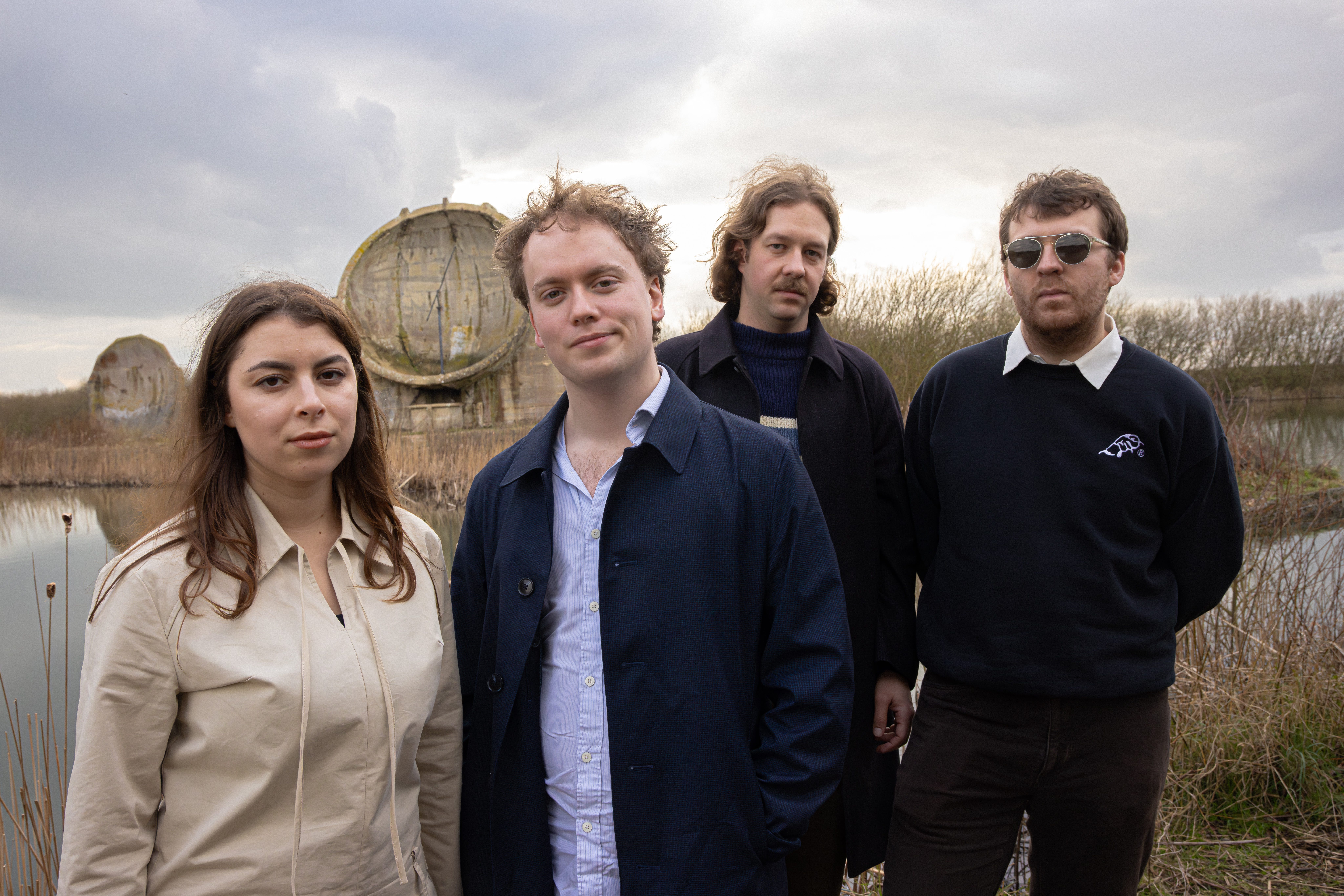
Since its inception, LICE has been a unique force in the UK’s musical landscape. Born a gnashing and screaming gang of uni students aping the raw noise and disgust of early avant-punk pioneers such as the Birthday Party and PIL they quickly cut up a reputation within the city's scene for their ferocious live shows. Since then they’ve evolved into an even more intriguing proposition, a true art rock act in the literal sense. Their debut album Wasteland: What Ails Our People is Clear was a post-modern opus that used a bludgeoning mix of noise rock and post-punk as a thin veneer to cover its ouroboros-esque intentions. It was a record that acted as both a contemporary experimental rock record from the UK while also being a perfect satire, deconstruction, and critique of contemporary UK experimental rock and the music journalists who praise it, among many many other topics that line its impressive grooves.
Three years later its follow up Third Time At The Beach is equally impressive. A grand tale of human existence from childhood to adulthood and how our perception is shaped by and ultimately overcomes the signals and signs that flood our retinas from birth. It’s a delightful affair in which dance-punk grooves mingle with post-minimalist piano and dessert rock guitar from a soundtrack to frontman Alastair Shuttleworth's entrancing rants. Just as Wasteland before appeared as an evolution of their debut eps so does Third Time feel like a proud step forward from a fish on to land. An example of the band's ever-ambitious interests is not just the concepts their music attempts to capture but the sounds that come out of it as well.
Due to both their history in Bristol and our mutual love of their music, we considered interviewing the band for a while. Thankfully, we managed to pop on their radar thanks to a review Devin wrote for post-trash which gradually blossomed into a phenomenal conversation with the frontman Alastair Shuttleworth. Over forty minutes we discussed LICE’s love of extremity - particularly their swing from the noisy maximalist excess of post-punk in Wasteland to the glacial influences of Philip Glass and minimalism on Third Time. We also discussed what it means to be experimental in the context of UK post-punk, the piecemeal recording techniques used on Third Time, and Alastair’s relationship as both a musician and journalist to Bristol, its self-made ethos, and the industry at large. Alastair proved to be ever knowledgeable, entertaining, and passionate with his love for both LICE’s music and the wider experimental visionaries across England and beyond.
DB: Both Wasteland and Third Time at the Beach are very conceptual records. When you guys write music do you begin with a concept in mind, with the idea that you're going to write a collection of songs built around a core concept?
AS: That's a very good question. It was very different in both instances. With Wasteland that was really exploring how we felt in the context of what was happening in UK guitar music at the time, how it fit into certain satirical traditions, things like that. So, in many ways that was kind of the summation of things that we had been thinking about and talking about the entire time we've been a band. With Third Time at the Beach, it was a little bit more focused. Around the time we finished Wasteland we were, and Silas was in particular was, getting very interested in reading slightly more heavyweight philosophical stuff, a lot of economic theory. We'd been thinking about our place in the world from a musical point of view. We thought for the next album, why don't we try to expand that to think more about our place in the wider world. So, talking about some slightly bigger things. The theory of reification, the idea of how we tend to think or talk about the big structures that we live our lives through, certain economic structures. Thinking about broader concepts like nationhood and time. You know, thinking about those as like settled physical laws as opposed to things that we've sort of constructed and as a result have some kind of agency in that we may forget about and therefore kind of bar ourselves from accessing more constructive, positive ways of thinking about them. So, the first album was about us in the music world and that was something that evolved over a very long period of time. The second album was about us in the wider world. And bizarrely, it was a lot faster to put together.
DB: Going off that, do you think with a next record you would try and expand further out because of the clear expansion in concepts from the past two records, or maybe try to go inward?
AS: That's a very good question. We've actually not told anyone about this, and its still kind of wet cement at the moment. We are currently writing stuff for the next record. It's currently looking like it's going to go inwards a bit, the scope, it's really going to be a record about us and about our story - in the sense of the four people that make up LICE now. We went from thinking in sort of medium terms, to thinking in big terms and now it's going to get a little bit smaller, a little bit more focused, and I think a lot more sentimental.
DB: Talking about that kind of progression from ideas, early on you were so very much noted for a lot of influence from the more noisy side of early post-punk, in particular Public Image Limited, The Fall and The Birthday Party seem to surround your orbit. Do you think you retain those influences in your newer work or do you feel like you’ve fully moved away from them?
AS: I guess the main thing with LICE, in terms of what we've always been interested in, is extremity. When we first started that meant much more abrasive stuff. All those bands were brand new to me when I first met Silas. So he was the gateway for me, and I think for all the other members of the group, to that kind of material - to noise and industrial and post-punk based sounds. So, that was what was kind of extreme and exciting to us at the start. That's still kind of the case through Third Time at the Beach, but there were other forms of extremity that we got more interested in as well. The big one being minimalism. There's an opera called Einstein on the Beach by Philip Glass, which is, for people that don't know, it's four hours long, there's no breaks, no intermission. The idea is that people either can stay for the whole thing if they've got the stamina, or can start filtering out. And the pieces are each like 20 minutes long, and involve loads and loads of different musicians and incredibly meticulous arrangements that shift over time very, very slowly. To us, becoming initiated in that was as mind-blowing as discovering that sort of a very heavy punk-facing stuff when we first started.
So, bits of that started to make their way into the record with Wasteland, but are a bit more realized on Third Time at the Beach. It's funny, the title track on Third Time at the Beach, in terms of chord progression, is based heavily on a piece from Einstein on the Beach called ‘Spaceship’, which is part of the reason that I referenced a spaceship in the lyrics. To celebrate the album coming out, a couple of weeks ago we all went out to the Barbican and we watched Philip Glass Ensemble performing some of his early works. And they went off stage and they came back to do an encore, which I didn't even realize was a thing. You know, seeing that kind of music in that kind of place. But they came on and did an Encore. And they went, “We're now going to play ‘Spaceship’ from Einstein on the Beach,” and we all just like freaked out. We're all just like grabbing each other going, “Oh God!”, you know. So yeah, that’s the music that's started to become more inspiring to us over time and is a bit more present in this record - using a lot more piano, a lot more softer organ-based sounds. But it's still for the same reasons that we were into that heavier stuff at the start.
DB: I can definitely hear that switch to minimalism, but still what kind of intermixed with some of that post-punk flair.
EA: As we’re talking about this kind of move away from your earlier, more post-punk sound, you've spoken before on your frustrations with post-punk in the UK and the way it can become quite formulaic. I think post-punk can sometimes be thought of as inherently experimental, and maybe that's part of the problem. What, to you, do you think it means to be truly experimental?
AS: To be experimental... The way that I think about it is in terms of subverting settled ideas around aesthetics, around genre tropes, around lyrical ideas. One of the big ambitions with Wasteland certainly was that it was not only going to be experimental in terms of thinking about what it was doing sonically, but in terms of thinking about what it would do lyrically. People might know that the album was issued with a kind of pamphlet with the lyrics. From the earliest inception of that record, something I really like the idea of was that the lyrics would be like a standalone piece in themselves, as kind of experimental fiction thing. As a result, that document got weirder and weirder and weirder. I won't explain the whole thing because, you know, it's going to take ages. It’s probably better if people find it. They can read it free online. It's on the website Issuu. It starts out in more concrete prose and through the course of the album, it becomes a little bit looser in terms of typographically how it's put together. There are stage directions as you move through the record, there's like counting sequences that are buried in one headphone but listed on the pamphlet, and they suggest kind of moving forwards and backwards in time. The intention was to have that as well, that you'd have an experimental record that was like sonically trying to play around with settled aesthetics and genre ideas but lyrically was trying to do the same thing with words. In Third Time at the Beach, I guess we're trying to do the same thing as well. It's a little bit less of a set piece in terms of how it's physically written and how it's presented on a page. It's a lot more to do with the way that stories are told. In that first album, it was very, as I say, very prose-based. You had a couple of characters in each song that and it would follow their story or their conversations. In this record, it was about hopping around in different timelines. I'm thinking about ‘Mown in Circles’, you've got Dante's conception of hell, you've got medieval crop circles, you've got like the 1960s saucer nests in Australia. You're just hopping around in time and in space. For this record, that's what experimentation meant to us. Does that answer your question?
EA: Yeah, I think it definitely does. I suppose you're attempting to explore something on multiple levels and in multiple mediums that all kind of link to each other in the same way.
AS: Yeah, absolutely. I'm going to reappropriate something here. I interviewed, because when I'm not doing stuff with LICE I’m a music journalist myself, and I interviewed David Lynch about an album that he made a few months ago. He used this expression, he was talking about cinema. And he said, the way I think about cinema is as sound and picture both. He was surprised that people don't always tend to think about that in the film world, even though that seems like a pretty obvious bit of logic. I feel the same way about lyric driven guitar records where it's so often that one is seen as completely subservient to the other. It's either you get a lot of records that are I guess quite conventional sonically but are trying to do incredibly ambitious things lyrically, or the other way around. We've tried to kind of match what's happening in both sides of the project.
EA: You've talked a little bit already about the influence of minimalism on your record. Do you think there are any more unconventional influences on the sound of the album?
AS: The main thing is in terms of the way it was recorded. This is something that evolved accidentally, but ended up fitting really well with what it was trying to do conceptually and all the stuff around learning and unlearning. We recorded it very slowly piecemeal and in loads of different spaces. Right when we started writing it, we played a couple shows in France. There was a festival called Levitation festival and a one-off show in Lahave. The Levitation Festival show, I'll tell you, this is kind of a fun story. It was a flip flop. When you go to a festival sometimes in Europe, you don't really have them laid out this way in this country for whatever reason, but you'll have two stages either side of like a big space. In our case, it was essentially a huge car park. On one side, you've got a stage, and on this side, you’ve got a stage, and when something this side finishes, the next thing starts and you go back and forward. There's nothing else, so there's not like loads of different stages doing different things. It's literally just one on, one off. So we were playing this thing quite late at night and we'd never played to a crowd this big. It was like two and a half thousand people with nothing else to watch except our set because the band before had finished. They all kind of like wheel around just watching us. A bunch of our friends, like the shame lot, were there and that. We get 30 seconds into the first song and the power cuts to the entire stage for like 10 minutes. So, we're there just like having to cover. Bruce, who, this is so unlike him - he's by nature quite a shy guy - he started playing ‘We Will Rock You’. And we're all just like laughing our asses off, it's like so stupid and so bait but there's like two and a half thousand French people just like really into it. [laughs]
Then the power came back and we finished the set and it ended up being one of our favorite shows that we've done. So, we were just really happy. And we kind of set a couple of days aside afterwards to stay in France and stay in this little farmhouse around the area and do some writing for what would become Third Time at the Beach. There's a few scraps of audio from those sessions that ended up making their way into this record. There's a door creaking in ‘White Tubes’. That's from that house. There's loads of little bits from Gareth's bedroom, like when we got back to the UK. There's a recording on the song ‘Wrapped in a Sheet’. I've not talked about this before either. There's a recording on ‘Wrapped in a Sheet’ where you can hear like a kind of [vocalises] like thing at the start - that's actually me in my room at about two in the morning. I went through a phase of just not being able to sleep like through the night and it was around the time we were writing this. So I kind of woke up and went to garage band. I hate recording technology, so whenever I demo vocals, I just do it into Garage Band. I had a mic set up and I just recorded myself going [vocalises] with like loads of reverb and this stock robot sound effect on it and that ended up making its way into the record. The way that it was recorded in that kind of piecemeal way, I'd say is probably sonically one of the weirder things about it. But again, that tied into what it's trying to do conceptually.
DB: Touching on conceptual elements, a lot of Wasteland was grounded among various things, including the Italian futurist movement.
AS: Mm-hmm.
DB: I know one of you made an Intonarumori, an Italian futurist noise machine.
AS: Yeah.
DB: Were there any specific movements that you drew upon in Third Time like you did with Wasteland?
AS: I don't think so. Not in the visual sense, certainly. I think part of the reason that Italian futurism resonated so much with what we were trying to do around
Wasteland was because there was such a strong written element to it. I should say, by the way, this is like early stage Italian futurism. It later became something, as people know, it later became something much uglier and worse. In terms of its political affiliations, Marinetti would later become reasonably close with Mussolini and the whole rise of fascism in Italy was something that a few people that had played a part in the early days of Italian futurism later came to occupy a sort of strange relationship with, which obviously all of us absolutely abhor. I think maybe that's part of the reason that we were interested in it. In the early days, it was such like a wonderful utopian thing that later became distorted by a few bad actors. With this record it didn't have that kind of element, at least we weren't as aware of it, there being like a real movement that we were inspired by. I guess it was kind of informed though by that stuff in Wasteland, the brashness of it. Really the thing about when you start recording music is that it's your voice and your character and your personality being filtered through loads of different ideas about what like right music is or what you know like a worthwhile artistic movement is. As you mature a bit and you get a little bit more confidence in what you're doing, and you also don't feel the pressure on you, you know, because first albums get so much more attention generally than later ones, you loosen up a little bit and you're not rooting yourself as closely to different things. The reference points that you have, you maybe don't think about as much. I'd say that was the case for us. This record was a lot more us in many ways than Wasteland was.
DB: Your band use some very complex lyrics. Do you ever worry about that almost being a barrier to entry to understanding your lyrics or do you maybe find you go about in a way where you create lyrical hooks that kind of give away the meaning?
AS: In terms of the lyrical complexity, that's just part of the extremity that we've always been drawn towards. I've always like really loved the idea of writing lyrics that demand attention in the same way that we always like the idea of writing music that demanded attention. I'd say if you're listening to the LICE record, the lyrics aren't going to be the main thing to sort of put you off or alienate you or keep you arm's length. It's all pretty weird. So fitting with that always felt comfortable and appealing to us. In terms of vocal hooks, Third Time at the Beach is definitely a lot more hook based and that's part of the reason we like the idea of having a few markers for people and thinking about the words as a bit more is one part of the music where we didn't previously, as I say, it was a bit more of having two separate things working together.
DB: You guys started off as a Bristol-based band. Do you think that the city still has much of an influence on your work?
AS: Definitely. I'd say that we wouldn't be as weird as we are if it weren't for Bristol.
I think that we wouldn't be as entrepreneurial as we are if it weren't for Bristol. Bristol, generally speaking, certainly at the time, it didn't have as much of an industry presence in national publications and [national] radio stations with regards to the new stuff that was coming through. There isn't any money in the music industry there and no labels are based there, despite its proximity on a map to London. I think people in other countries would be absolutely stupefied by this. It seems like the A&Rs and the journalists based in the capital had very little awareness of what was happening in the city, IDLES being the obvious example, they were going for many years before anybody started really paying them serious attention. But there were loads of acts like that. And as a result, it fosters this thing in the city where people are very dependent on themselves and the community to start labels, to start publications, to start doing radio things. Hence, you get Noods and all these brilliant, brilliant, small labels. The big thing in town when we first came to Bristol was Howling Owl. Now you've got all these amazing new spaces like Strange Brew. It’s definitely something that has to nurture itself and being for the most part, through our history, a self-managed band, self-releasing our first album, these are all things that I don't think we would have been equipped to do if we hadn't started out in Bristol.
EA: Harking back a little bit, obviously you are also a journalist and you started out doing journalism in Bristol with the Bristol Germ. Do you think that your journalism has influenced the way you go about making music?
AS: I'd say definitely, writing about music definitely informed the way that I think about LICE in the context of music, in the context of the industry, the relationship between groups and audiences. Yeah, I definitely think that it shaped the way that I write lyrics, the way that I think about everything to do with LICE. I don't think that I'd write lyrics or do things in LICE the way I do if I didn't have that background in journalism.
EA: In the Bristol Germ, you have these kind of manifestos in each copy. How do you relate to those manifestos now?
AS: You know, all the manifestos were modelled on a publication called Blast, which was something made by the Vorticists. They were meant to be ridiculous and brash but were also each designed to focus on a very specific ill in the British music industry as I saw it. The way that I approached it at the time and that I still think about it is that they are almost fixed documents on viewpoints that I had about problems in the British music industry. Obviously, I was a younger guy at the time. Growing up and becoming more involved in the industry, now I've worked in national radio and have been involved in stuff at a higher level and, you know, been to other countries and stuff, it does change the way that you think about it. So, there were a lot of those that as you get older and your viewpoints on stuff become a bit more nuanced, you realize were maybe a little bit narrow in their perspective and were maybe a little bit like blunt tools. But the spirit of a lot of them I definitely think holds up. I mean, there's things like venue closure.
The, in my opinion, slightly backwards relationship that a lot of media has with new music in terms of thinking about it as breaking artists or building future stars. The way I see it, that should ultimately be incidental for everything at the local level and the national level. Because when you make radio especially about building big names, I think you're kind of putting the cart before the horse. It leads a lot of radio stations to give continuous support and play to projects in the nadirs of what they're doing creatively. So, you get loads of really bad music that still gets played, that still gets covered at a high level. You're sort of pulling these things away from their original office of public service, about bringing people into touch with music that's new and interesting and exciting when you’re more focused on how these projects are faring, when you're kind of seeing them as in service to the artists, if that makes sense. All of that stuff I actually thought was pretty bang on for somebody making his first steps in music journalism land.
But I've not read them in a while. I'm sure that you know there's things that I'd look at and think, oh, yeah, I just didn't understand that. I didn't understand how that fit into the industry. I didn't understand the pressures these people that I'm ragging on were under. So yeah, that's uh that's it. But I don't know, it's one of those things that's I'm glad I did as a young person because, you know, I mean, I'm still young, I'm 28, but 10 years from now, would I do something like the Germ? Probably not. I probably wouldn't have the hard-headedness that you need to make something like that.